
Khai Dinh Tomb is one of the most iconic royal mausoleums in Hue, Vietnam — a city renowned for its spiritual tourism, ancient temples, and imperial tombs. Known as one of the top 7 most beautiful tombs in Hue, Khai Dinh Tomb attracts thousands of visitors each year thanks to its unique blend of Eastern and Western architecture.
So, where exactly is Khai Dinh Tomb located? What is the entrance fee? What are the opening hours? When was it built, and what makes it so special? In this article, we’ll answer all these questions and share helpful travel tips for your visit.
Introduction to Khai Dinh Tomb
Where Is Khai Dinh Tomb Located?
Khai Dinh Tomb, also known as Ứng Lăng, is situated in Thuy Bang Commune, Huong Thuy District, Thua Thien-Hue Province, Vietnam. The tomb rests on Chau Chu Mountain (also called Chau E), approximately 10 kilometers southwest of Hue city center. Thanks to its elevated position, visitors can enjoy scenic views of the surrounding hills and countryside. Khai Dinh Tomb is widely recognized as one of the most unique and striking imperial tombs built during the Nguyen Dynasty.
When Was Khai Dinh Tomb Built?
The construction of Khai Dinh Tomb began on September 4, 1920, and took 11 years to complete. Emperor Khai Dinh, the 12th ruler of the Nguyen Dynasty, personally oversaw its development. What makes this tomb particularly distinctive is the combination of traditional Vietnamese elements with modern Western materials and techniques.
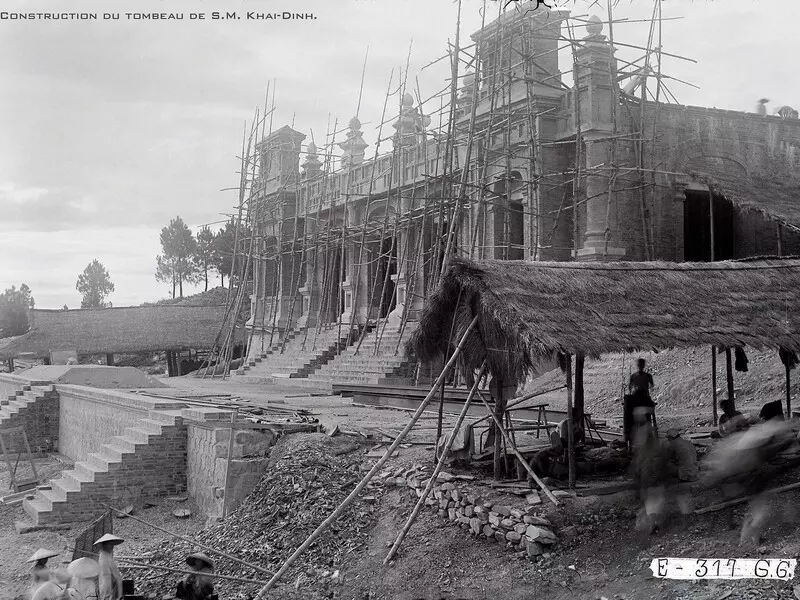
To achieve his vision, the emperor ordered materials from abroad: steel, iron, cement, and glazed tiles from France; porcelain and stained glass from China and Japan. Although the tomb covers a relatively modest area of 117 by 48.5 meters, its construction was labor-intensive and meticulously detailed. The result is a richly adorned structure that blends Eastern spirituality with European aesthetics.
At the heart of the tomb stands a bronze statue of Emperor Khai Dinh seated solemnly on a throne. Cast in France in 1922, the statue rests above his actual burial chamber and reflects the emperor’s desire for a tomb that would both honor his reign and symbolize cultural progress during a time of change.
Architectural Overview of Khai Dinh Tomb
The tomb is designed as a rectangular structure that climbs the mountainside through 127 stone steps. The layout follows traditional feng shui principles, with the surrounding hills and natural elements symbolizing harmony and protection.
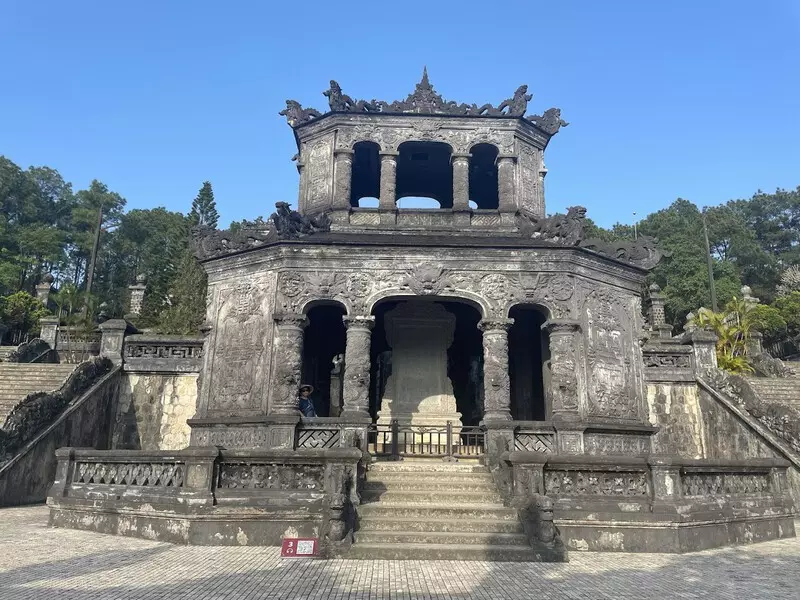
At the highest point of the complex is Thien Dinh Palace, the central architectural feature of Khai Dinh Tomb. This palace consists of five interconnected chambers. On either side are the Left and Right Chambers, used by guards and caretakers. At the front is Khai Thanh Hall, which houses the altar and portrait of Emperor Khai Dinh. At the center lies the imperial altar, known as Buu An, where the bronze statue of the emperor is placed. Beneath this statue is the emperor’s actual tomb. At the rear of the palace is the sanctuary, where his ancestral tablet is enshrined.
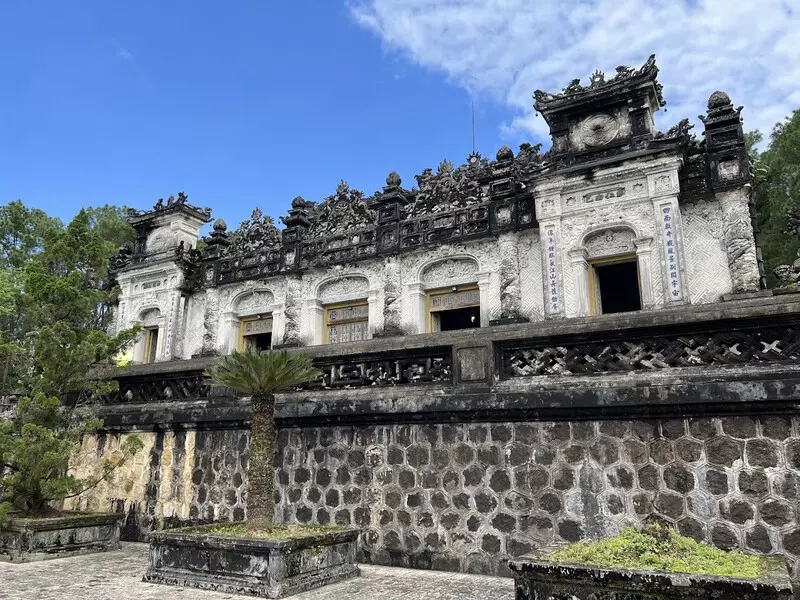
One of the most impressive aspects of Khai Dinh Tomb is the elaborate interior decoration of Thien Dinh Palace. The central halls are covered in colorful mosaics made from broken porcelain and stained glass, forming intricate patterns and mythological scenes. A massive bronze canopy, weighing one ton and shaped like flowing silk, is suspended above the emperor’s statue, adding a sense of elegance and reverence to the space.
A key contributor to the artistic magnificence of the tomb was artisan Phan Van Tach, who created the famous ceiling murals known as “Nine Dragons Hidden in the Clouds”. These vibrant works enhance the cultural and artistic value of the entire structure.
Cultural and Historical Significance of Khai Dinh Tomb
Khai Dinh Tomb is not merely a burial site; it is a reflection of cultural transformation during the final years of Vietnam’s imperial era. Constructed in the early 20th century, the tomb symbolizes the fusion of Eastern traditions with Western influences. Emperor Khai Dinh’s openness to global architecture and modern materials is evident throughout the design, showcasing his vision for a new direction in royal aesthetics.
Beyond its architectural beauty, the tomb also represents the evolution of Vietnamese decorative arts, especially in the use of ceramics, glass, and detailed relief work. These features make the tomb a valuable monument in the preservation of Vietnam’s cultural heritage.
Khai Dinh Tomb stands as a testament to an important historical period and to a ruler who dared to break with convention. Today, it attracts not only tourists but also historians, architects, and artists from around the world. The site continues to be a place where history, art, and spiritual heritage come together, offering a deep and memorable experience for all who visit.
Travel Tips and Visiting Experience for Khai Dinh Tomb
When is the Best Time to Visit Khai Dinh Tomb?
The best time to visit Khai Dinh Tomb in Hue is during the dry season, from May to August. During this period, the weather is sunny and pleasant, making it ideal for exploring the tomb and admiring the beautiful architecture and surrounding natural scenery.

Spring, from January to April, is also a great time to visit, with mild temperatures and lush greenery. However, there may be occasional light rain early in the spring, but it won’t significantly affect your visit.
Note: It is best to avoid visiting during the rainy season, from September to December, when Hue experiences heavy and frequent rains, which can affect your travel experience and make moving around more difficult.
Opening Hours of Khai Dinh Tomb
-
Summer: from 06:30 AM to 05:30 PM
-
Winter: from 06:30 AM to 05:30 PM
Phone number for management: 0234 3523 237
Khai Dinh Tomb is open every day of the week, including public holidays.
Ticket Prices for Khai Dinh Tomb
-
Adults and children over 12 years old: 150,000 VND/ticket
-
Children from 7 to 12 years old: 30,000 VND/ticket
-
Children under 7 years old: Free
-
You can also hire a tour guide on-site for 300,000 VND/guide (valid for 2 days).
You can also check out the article: Hue Tourist Attraction Entrance Fees 2025 – Complete Guide.
How to Visit Khai Dinh Tomb?
To visit Khai Dinh Tomb, there are several transportation options based on your preferences and plans.
-
If you enjoy freedom and want to explore at your own pace, renting a motorbike is a great option. Riding a motorbike not only allows you to enjoy the fresh air but also gives you the freedom to stop for photos or visit other interesting places along the way. From the center of Hue, it takes about 15-20 minutes to reach Khai Dinh Tomb by motorbike.
-
If you’re staying in Da Nang or Hoi An, you can take a day trip from Da Nang to Hue with a private car from ExplorePrivateCar.com. This will allow you to comfortably explore Khai Dinh Tomb and also visit other famous attractions in Hue, such as Thien Mu Pagoda, Hue Imperial City, and Tomb of Tu Duc.
-
Alternatively, you can also choose to take a taxi or hire a private car in Hue for a more convenient and comfortable way to get to the tomb.
Historical Value of Khai Dinh Tomb
Khai Dinh Tomb is not just a unique architectural masterpiece, but also an important symbol in the history of the Nguyen Dynasty. Built in the early 20th century, the tomb represents the blend of Eastern and Western architectural styles and cultures, reflecting the open-mindedness and modernity of King Khai Dinh.
The historical value of the tomb is also found in the fact that it is the final resting place of the 12th king of the Nguyen Dynasty, who made significant contributions to modernizing the country.
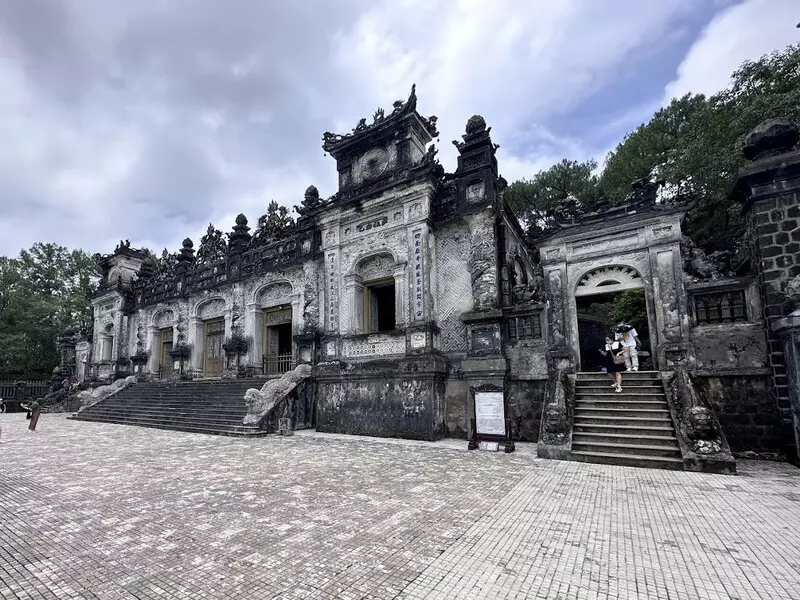
The tomb is not only a place of worship but also serves as evidence of the changing mindset and lifestyle of the aristocracy at that time. Through its intricate architecture and decoration, Khai Dinh Tomb marks a clear point in Vietnam’s history, when Western influences began to permeate traditional culture.
Furthermore, Khai Dinh Tomb is a priceless cultural heritage, recognized not only for its artistic value but also for its symbolism in expressing the gratitude of the people towards the kings who dedicated themselves to the country.
Today, Khai Dinh Tomb attracts visitors not only for its majestic beauty but also as a place for the people and future generations to remember a special period in the nation’s history, thereby contributing to the preservation and promotion of the cultural values of the homeland.
Architecture of Khai Dinh Tomb
To provide a comprehensive overview, we will list some of the key architectural features of the tomb:
Tam Quan Gate
The Tam Quan Gate of Khai Dinh Tomb makes a strong impression with its majestic and grand design, capturing attention from afar. To reach the gate, you need to ascend 37 steps, creating the feeling that you are entering a sacred and solemn world.
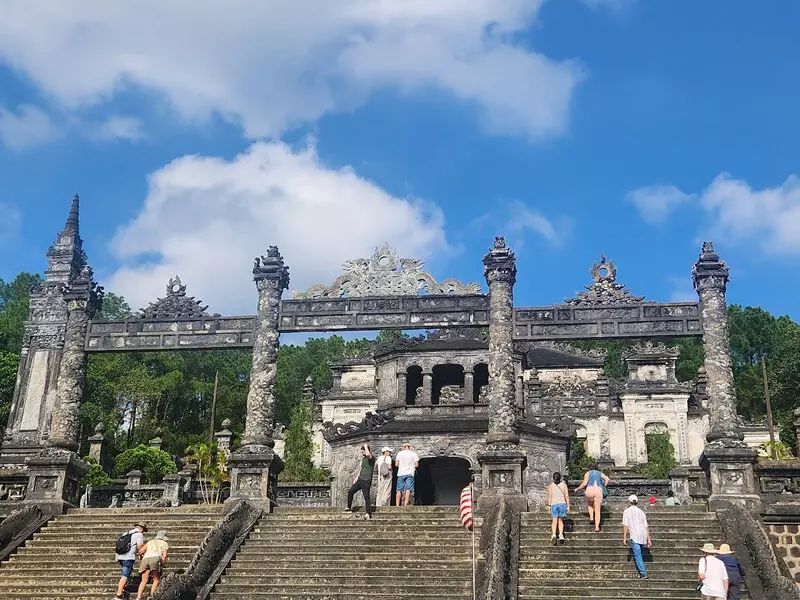
The first level of the gate features two small structures on the left and right, called Tả Tòng Tự and Hữu Tòng Tự, which house tablets commemorating those who contributed to the tomb’s construction.
What makes the Tam Quan Gate stand out is its unique architectural style. It not only reflects influences from Hinduism but also cleverly combines modern European architecture with traditional Vietnamese elements. This fusion creates a space that is both solemn and dynamic, offering visitors a harmonious blend of Eastern and Western cultures.
Nghi Mon and Bai Dinh Courtyard
After passing through the Tam Quan Gate, you will continue your journey up 29 steps to reach the Nghi Mon area and Bai Dinh Courtyard of Khai Dinh Tomb. This area is not just a transitional space but an artistic highlight, exuding a solemn and sacred atmosphere.
The area is adorned with four rows of statues, including deities, soldiers, and civil and military officials, recreating the image of the royal court during the reign of King Khai Dinh. Each statue is carved to a 1:1 scale, matching the actual size of a human, demonstrating the artisans’ respect and precision in portraying historical figures.
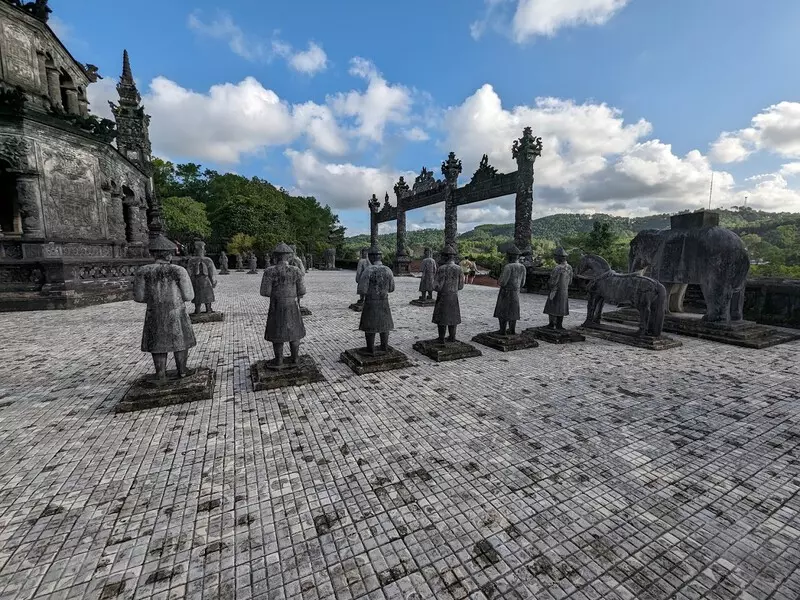
What makes these statues remarkable is the meticulous attention to detail. From the facial expressions, clothing, to posture, every element is carefully crafted, creating a vivid representation of the royal court’s environment where King Khai Dinh once ruled and welcomed high-ranking officials.
Thiên Định Hall
Thiên Định Hall is located on the fifth level of Khai Dinh Tomb, the highest and most sacred area of the entire tomb. Here, the remains of King Khai Dinh are interred, creating a unique and magnificent space that reflects the king’s passion for art and creativity.
Thiên Định Hall is arranged with five connected sections, providing a fascinating experience for visitors. The center features a Bửu Tán, housing a statue of the king as a symbol of honor and reverence.
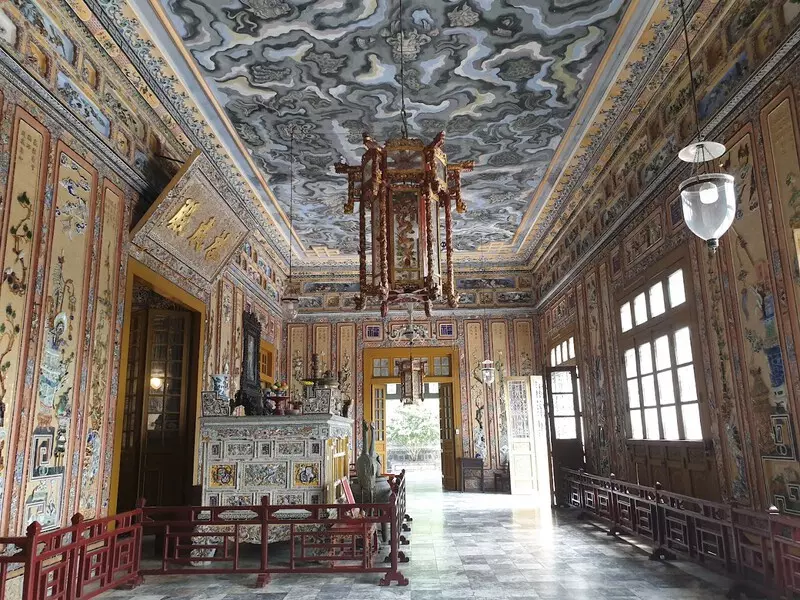
On either side are the Tả and Hữu Trực rooms, designed to house the soldiers guarding the tomb, and in front is the Khải Thành Hall, where the king’s altar is placed. At the innermost part is the shrine containing the king’s memorial tablet and statue.
What makes Thiên Định Hall special is its harmonious blend of traditional architecture and modern elements. The ceramic and glass mosaic decorations, imported from China and Japan, create unique and highly creative works of art.
Khải Thành Hall
Khải Thành Hall is located within Thiên Định Hall, playing a key role as the place where the king’s altar and remains are placed. The hall is built from concrete and painted with a bronze color, giving it a solid yet graceful appearance. The decorative motifs around it are completed with luxurious gold, creating a cohesive design with the entire tomb.
Beneath the hall is where the remains of King Khai Dinh are laid, showing deep respect and reverence for the king. A large plaque reading “Khải Thành Điện” hangs in a prominent position, and above it is the bronze statue of the king, symbolizing his eternal presence in the hearts of the people.

In the center of Khải Thành Hall is the main chamber, which features a 1-ton Bửu Tán made from reinforced concrete but with a soft, graceful design. This contrast creates a unique beauty, drawing the attention of visitors.
On the ceiling of the central three sections of the hall, the painting “Cửu Long Ẩn Vân” (Nine Dragons Hidden in Clouds) adds a mystical touch, depicting nine dragons concealed within clouds. This image is not only symbolic but also reflects the sacred and noble nature of the king in Vietnamese culture.
The Bronze Statue of King Khai Dinh
Khai Dinh Tomb has two distinctive statues: one of the king seated on the throne and another of him sitting casually. The statue seated on the throne was created in 1920 by two French artists in collaboration with a local craftsman from Huế who applied the gold leaf to give the statue its radiant and majestic appearance.
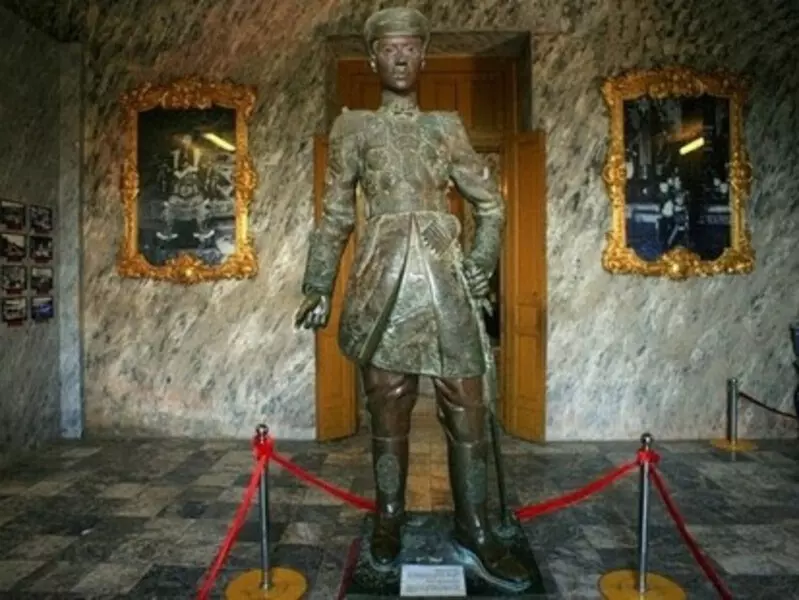
Meanwhile, the standing statue was created by a craftsman from Quảng Nam and cast in Huế. Originally placed at Cung An Định, it was moved to Thiên Định Hall in 1975, enriching the artistic beauty and value of Khai Dinh Tomb.
Conclusion
In conclusion, this article by Explore Private Car’s has offered a detailed overview of Khai Dinh Tomb, answering key questions such as ticket prices, opening hours, and the year of its construction. If there’s anything else you’re unsure about, don’t hesitate to leave a comment below!
